
You face a choice when a sewer line fails: different trenchless options, materials, costs, and site limits change the outcome and your bill. Compare methods, warranties, timelines, and site constraints so you can pick the option that fits your Fort Collins home and budget.

This article walks through the key questions to ask contractors and what tradeoffs to weigh, from pipe material to permit handling and access limits. It helps homeowners spot where estimates differ and what to insist on before work starts.
1) Compare trenchless methods: pipe bursting vs. cured-in-place pipe (CIPP)
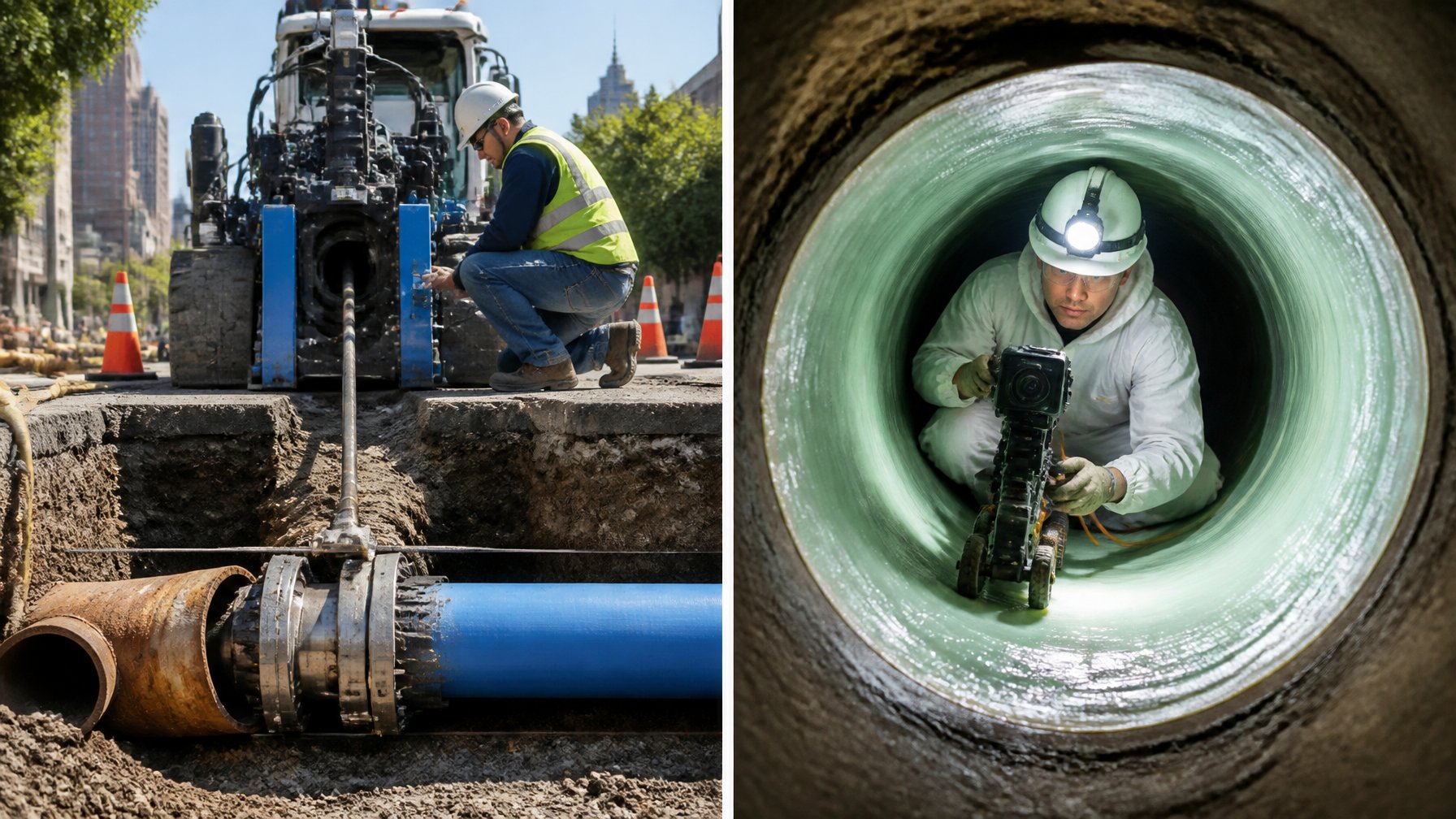
They should compare how each method works and which pipe problems they fix. Ask whether the line needs full replacement or an internal lining. Pipe bursting breaks the old pipe and pulls a new one in; it suits collapsed or severely cracked lines. CIPP inserts a resin-saturated liner that cures in place and suits pipes with intact alignment but many cracks or leaks.
They should weigh surface disruption and access needs. Pipe bursting often needs two excavation pits and can disturb landscaping. CIPP needs only access points and less digging, but it may reduce inside diameter slightly.
Homeowners should ask about material lifespan, warranty, and schedule. Compare expected life (often 50+ years for new pipe), cure time, and when the line returns to service. Check whether the contractor offers a written warranty and show a service page like Sewer Repair Services for more details.
2) Assess pipe material: cast iron, clay, PVC, or HDPE

Homeowners should identify the pipe material before choosing trenchless repairs. Cast iron corrodes and may need lining or replacement; ask if CIPP or spot repair works and what lifespan to expect. Clay is brittle and can shift; ask if pipe bursting will crush fragments or if relining avoids future breaks.
PVC is common and durable but can have offset joints; ask whether relining will seal joints or if spot replacement is better. HDPE is flexible and resists root intrusion; ask if pipe-bursting or pull-in-place lining fits the service line.
Compare costs, expected life, and how each method handles joints, roots, and offsets. Check if the contractor offers a material inspection and pipe video report. See the homepage for more on trenchless sewer services.
3) Check cost estimate details: excavation, permits, and lateral reconnections
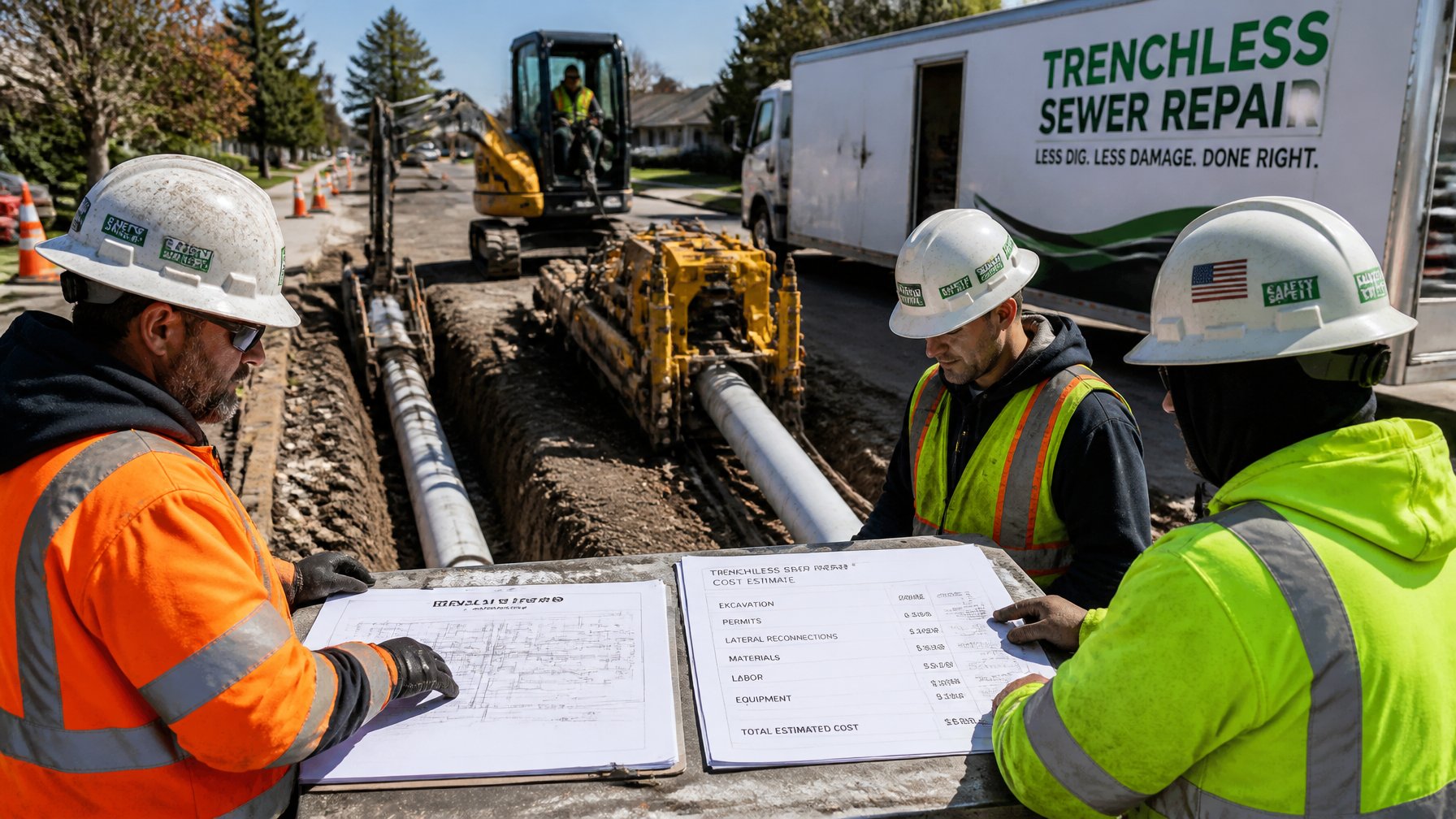
They should list what the estimate covers. Homeowners need to compare line items like digging, backfill, pipe materials, and restoration. Ask whether excavation is full or spot digs and how much surface repair is included.
Confirm permit fees and who obtains permits. Permits can add time and cost. Ask if the contractor handles drawings and inspections or if the homeowner must do anything.
Look for lateral reconnection fees and what “reconnection” includes. Some quotes cover simple tie-ins; others charge extra for complex re-alignments at the house. Ask for a clear price range for potential complications.
Compare warranties tied to specific work items. Warranties may differ for pipe, labor, and restoration, which affects long-term value. Visit the homepage for more service details.
4) Evaluate warranty terms: length, transferable, and covered components

They should compare warranty length first. Ask how many years the warranty lasts and whether different parts (lining, seals, and excavated connections) have different terms. A longer warranty can mean more confidence, but check what voids it — missed maintenance or chemical damage often voids coverage.
They should confirm whether the warranty is transferable. Homeowners who may sell the house should ask if the warranty moves to the new owner and whether a fee or paperwork is required. Transferable warranties add resale value and reduce buyer concerns.
They should review exactly what the warranty covers. Ask for a written list of covered components, labor, and return visits for leaks or failures. Also ask about caps, prorated terms, and whether work by other contractors cancels protection.
They should request the full warranty in writing before work starts. Compare real policy wording, not verbal promises. Visit the service page for more on trenchless options.
5) Ask about access points: driveway, yard, and street limits

They should explain where crews will enter and exit the property and what limits exist for heavy equipment. Ask whether vehicles can park on the driveway or if they must use the street, and check for permits or HOA rules that restrict access.
Compare how much yard disruption each method causes. Find out if the crew needs a trenching machine on the lawn or can work from the street with pipe-bursting or lining. Weigh lower cost against more landscaping damage.
Confirm who handles restoration and any extra fees for tight access. Ask about timeline changes when access is limited and if temporary protective mats are used. See examples on the homepage for typical services.
6) Confirm diagnostic tools: CCTV inspection resolution and report

They should explain the camera type, resolution, and lighting used for CCTV inspections. Ask if the system records high-definition video or only standard definition, and whether images include distance markers and date/time stamps. Higher resolution finds small cracks but costs more.
Request a clear written report with labeled stills and a simple map of faults. The report should list pipe size, material, depth, and exact defect locations so a homeowner can compare bids and repair options. Ask for an electronic copy.
Compare whether the inspector uses locator tools to map lines above ground. That helps plan trenchless vs. traditional repair and reduces guesswork during bidding. Check the company homepage for more on services.
7) Inquire about timeline: prep, repair, and restoration schedule
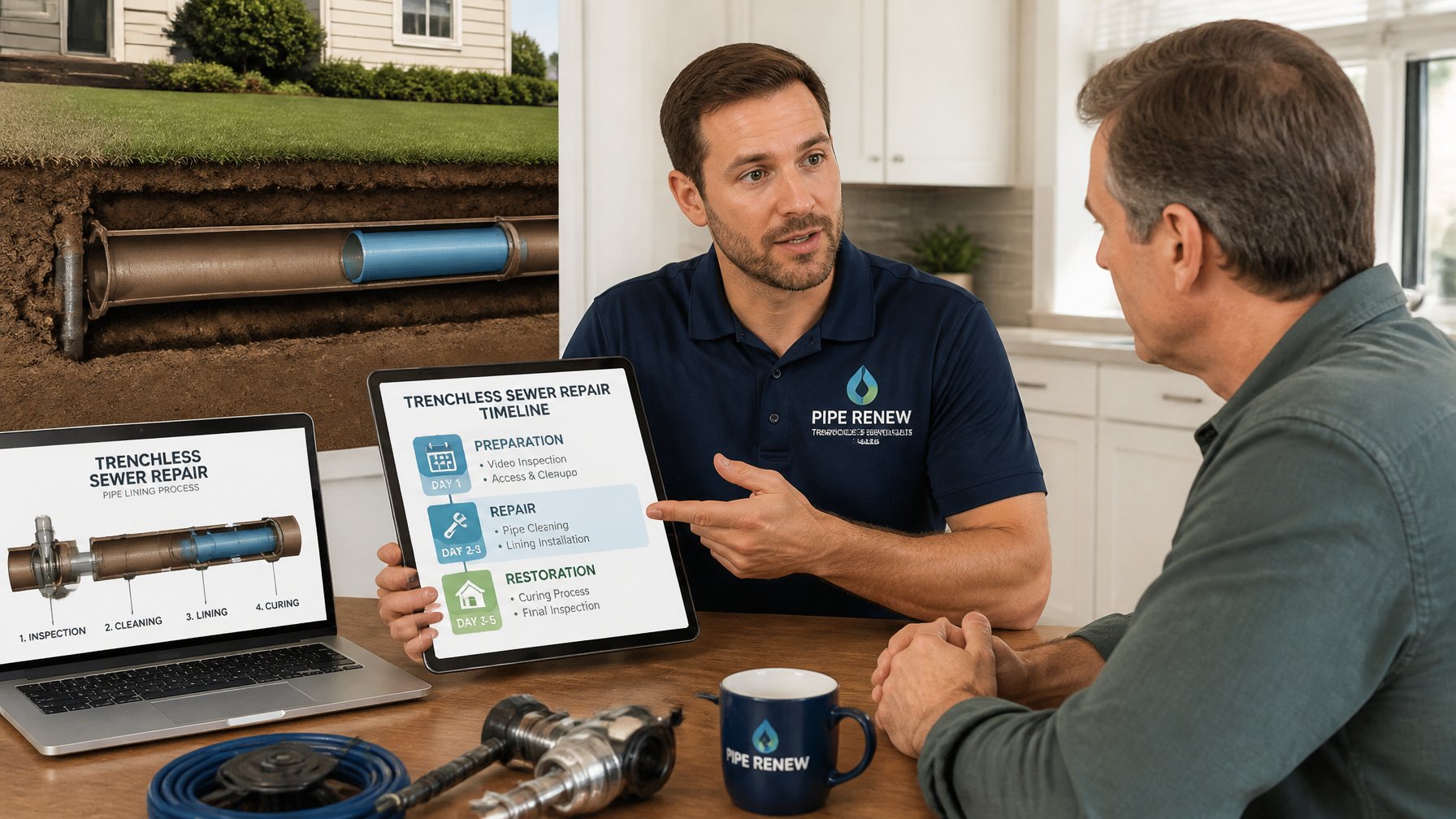
They should describe the full timeline: prep work, main repair, and cleanup. Ask how long each phase takes and what factors could extend the schedule, like weather or hidden damage.
Compare start dates and daily work hours between contractors. Ask who will be on site, when they arrive, and if the crew works weekends. This helps plan childcare, pets, and parking.
Ask about homeowner prep tasks and deadlines. Find out if the crew needs yard access, removed landscaping, or capped utilities before work begins.
Confirm restoration steps and time to finish landscaping, driveways, or indoor repairs. Ask whether the contractor handles restoration or subcontracts it and how long warranties cover restored areas.
See a sample contract timeline or project schedule. Check the homepage for more service details and scheduling practices.
8) Verify permit and code handling: who obtains and pays for permits
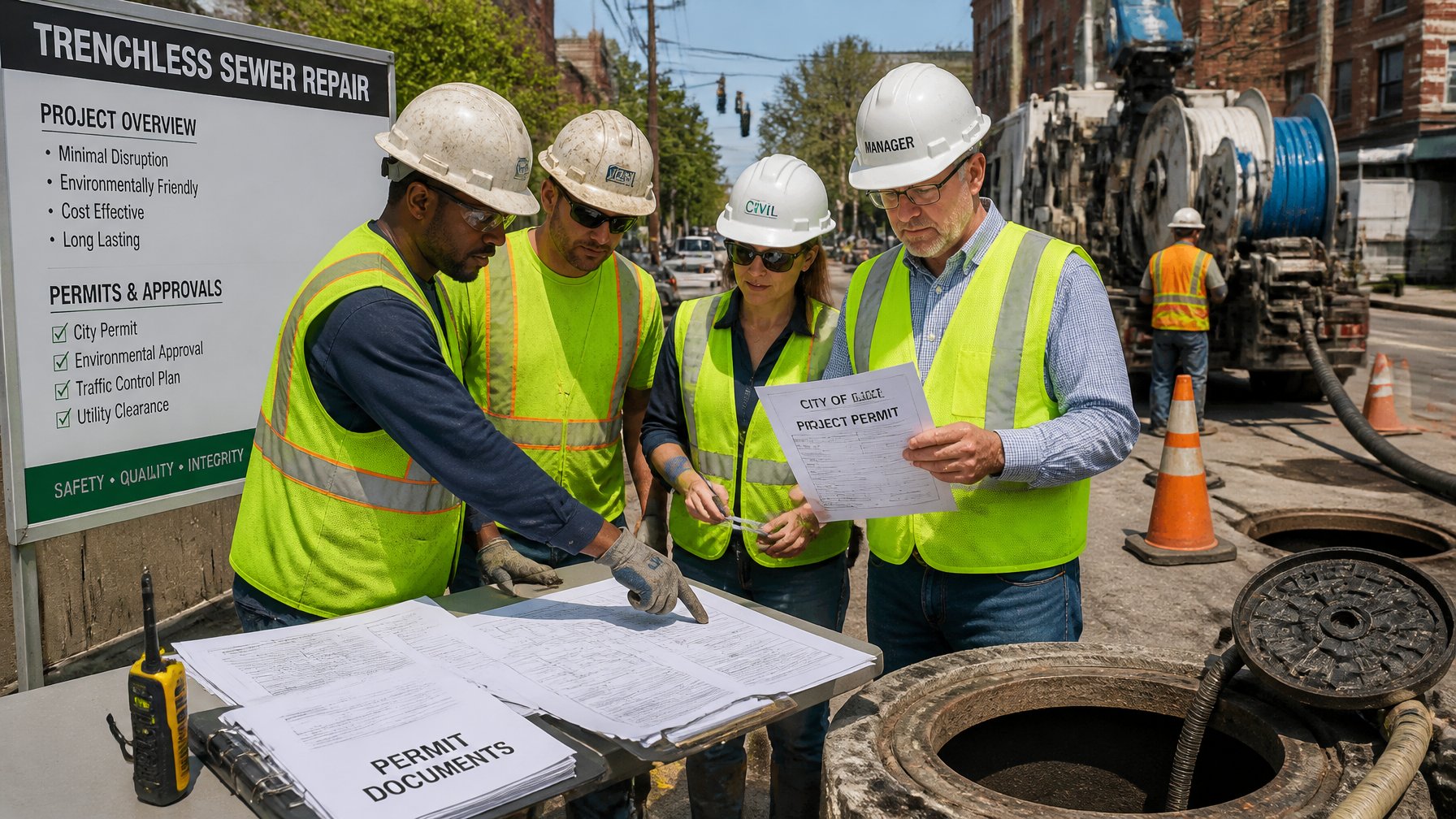
They should say who will pull permits and handle code inspections. Compare contractors who include permit fees in their estimate versus those who bill separately. Ask if the quote lists permit costs and whether the contractor coordinates inspections.
Confirm who files for permits and gets approvals. Some homeowners prefer contractors to manage this to avoid delays. Others want to submit permits themselves to control costs.
Check local code knowledge and past experience with the local building department. A contractor familiar with local rules can speed approvals, but that does not guarantee lower fees. Ask for a timeline for permits and inspections.
If unclear, request permit documentation before work starts. Homeowners can also read more about trenchless sewer services on the homepage to learn typical permit needs and timelines.
9) Request soil and site constraints: tree roots, bedrock, and groundwater
They should ask the contractor about tree roots near the sewer line and how those roots affect trenchless options. Compare whether the contractor will remove roots, use root barriers, or recommend pipe materials that resist intrusion. Ask about the tradeoff between cost and long-term root control.
They should check for shallow bedrock or hard soils that can limit pipe-bursting or directional drilling. Ask which methods the contractor has used in similar ground and whether they will locate rock before work. Compare any extra charges or slower timelines when rock is present.
They should ask about groundwater levels and the risk of flooding during repairs. Compare methods for dewatering, floatation protection, or scheduling work in drier seasons. For general service info, see sewer repair services.